
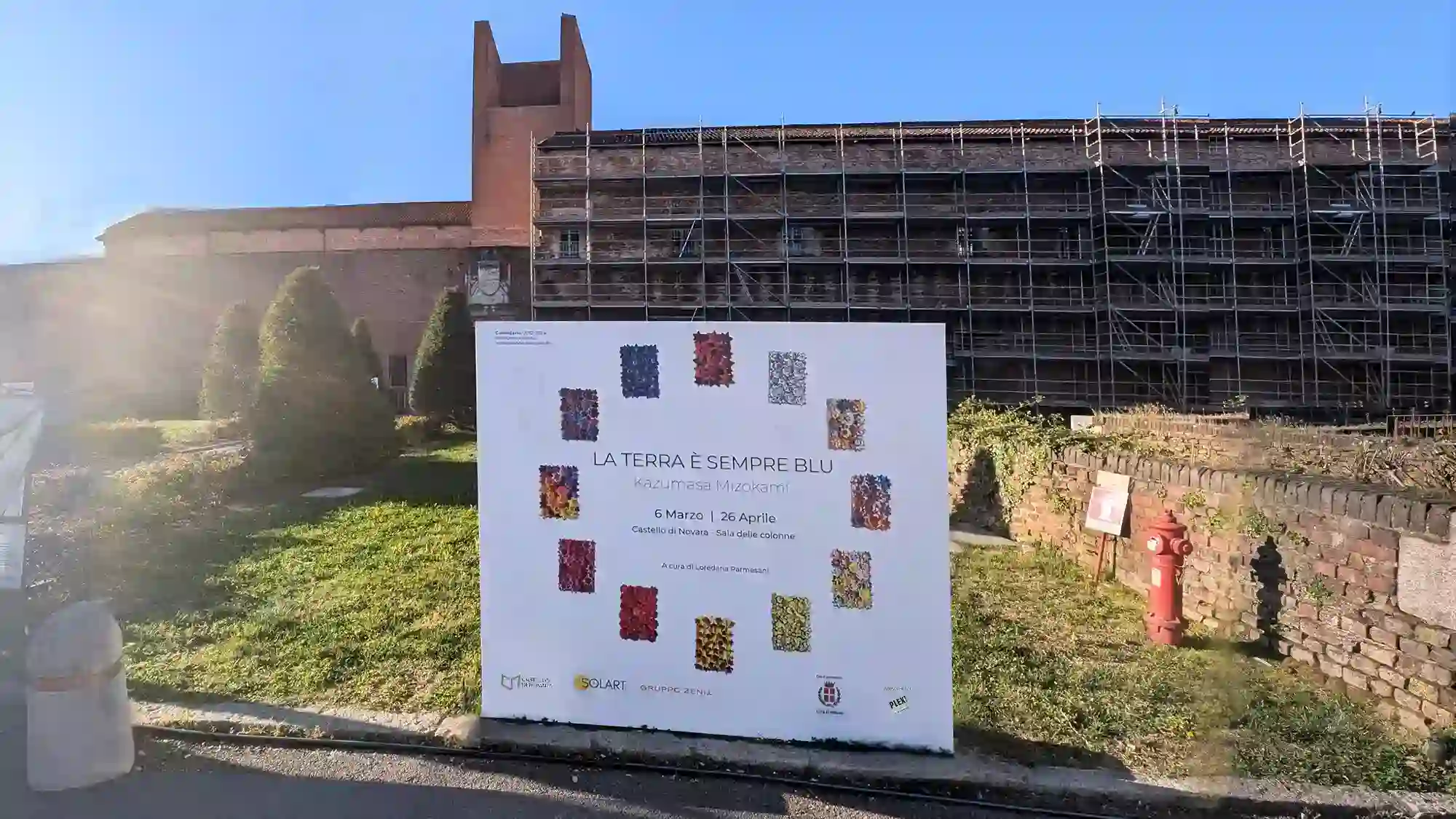
March 6 – April 26, 2026 / the solo exhibition
Castello Sforzesco di Novara (Sala delle Colonne)
Curated by Loredana Parmesani
The exhibition catalogue / the darkness critic Loredana Parmesani, interview Barbara Cottavoz, photos Mario Finotti, coordination Marianna Cappa, publisher Allemandi
The Earth is always blue
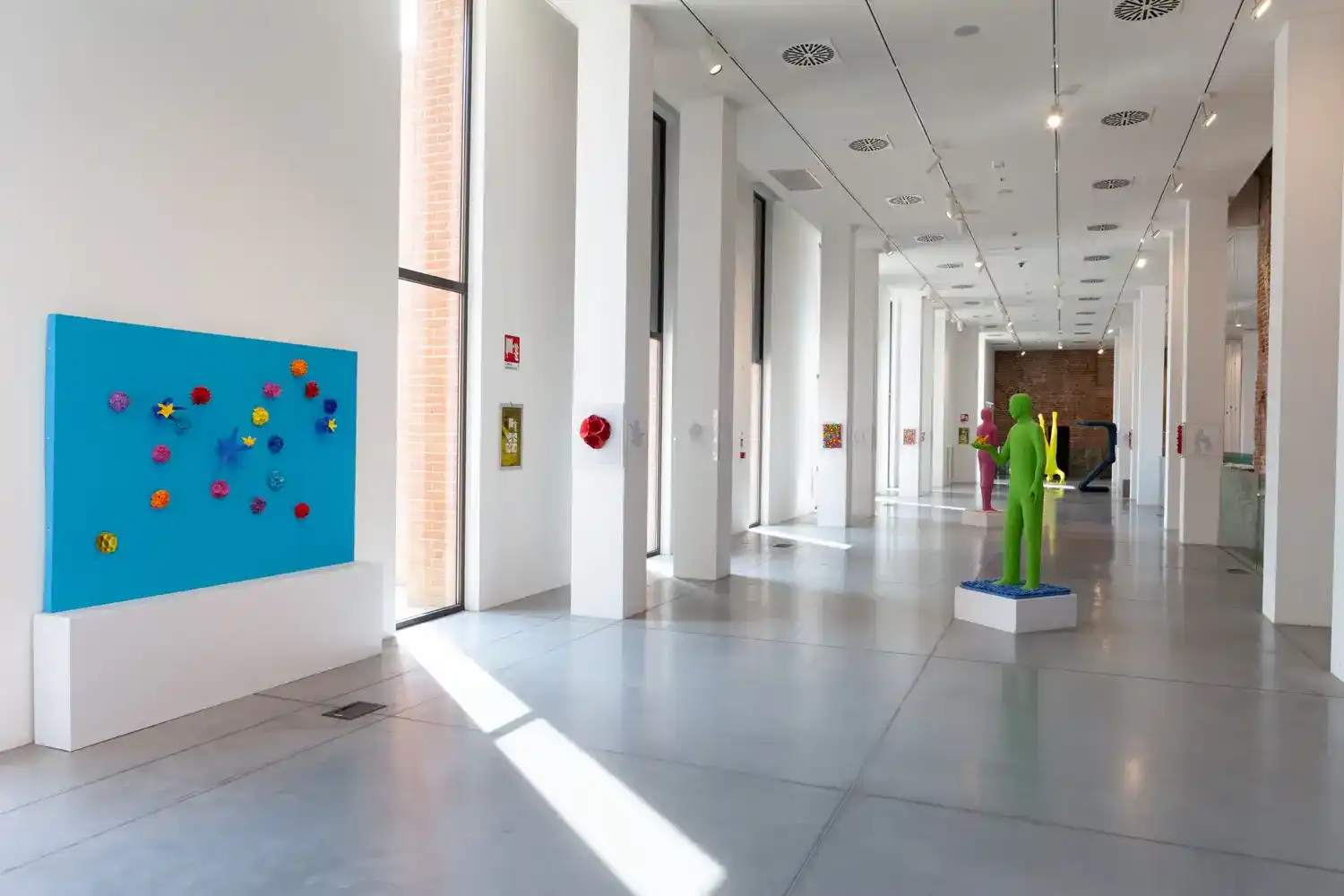
The historic Sale delle Colonne at the Novara Castle welcome a poetic universe with the solo exhibition “La terra è sempre blu” (The Earth is Always Blue) by Kazumasa Mizokami. Curated by Loredana Parmesani, the exhibition transforms the historical rooms into a true “shared space of imagination”.
The exhibition itinerary brings together painted terracotta pieces and works on paper that fit naturally into the space. Through the ceramic medium, the exhibition evokes a harmonious dialogue between human beings and nature, becoming a tale of balance and coexistence. As highlighted by the trade press in Il Giornale dell’Arte, the artist’s research blends the roots of the Japanese ceramic tradition with an essential and universal language.
The sculptures on display, often gathered in joyful communities, suggest a profound reflection on simplicity and the possibilities of coexistence between different cultures and generations. The exhibition’s intent is summarized by the curator’s words, who describes it as “a universe suspended between artifice and poetry, where art restores the essential breath of life to matter”. The common thread is a powerful statement by the artist himself: “In the age of Artificial Intelligence, human intuition becomes even more important”. The event is presented by the cultural association Solart, with the support of Gruppo Zenit.
The Earth is Always Blue: The Exhibition Itinerary
The title of the exhibition, “La terra è sempre blu” (The Earth is Always Blue), stems from a poetic suggestion by Kazumasa Mizokami: the feeling of walking in a park under a clear sky, imagining being able to observe the Earth from space and wishing it would forever keep that wonderful blue color, a source of profound serenity.
The exhibition gathers works created in the artist’s Milan studio from 1992 to 2026. Mizokami’s creative process does not involve the use of tools or machinery to sculpt rigid materials; the artist prefers earth, freely modeling the sculptures solely with the movement of his hands and directly following his imagination. After baking in the kiln, the terracotta comes to life thanks to a pictorial exploration of color, achieved by mixing pure pigments with an acrylic medium. Through these forms, the artist intends to express the human presence in the limited time of its existence and the emotional power of that moment.
The Works on Display (Sale delle Colonne)
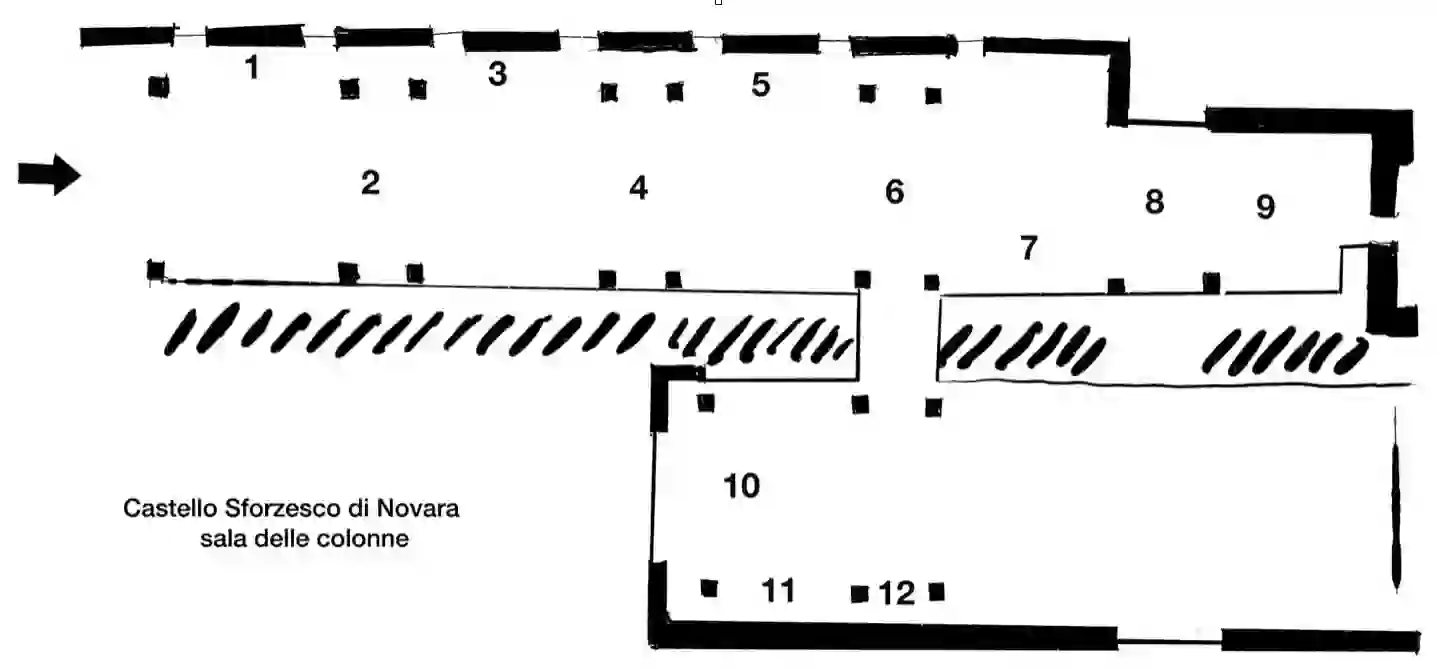
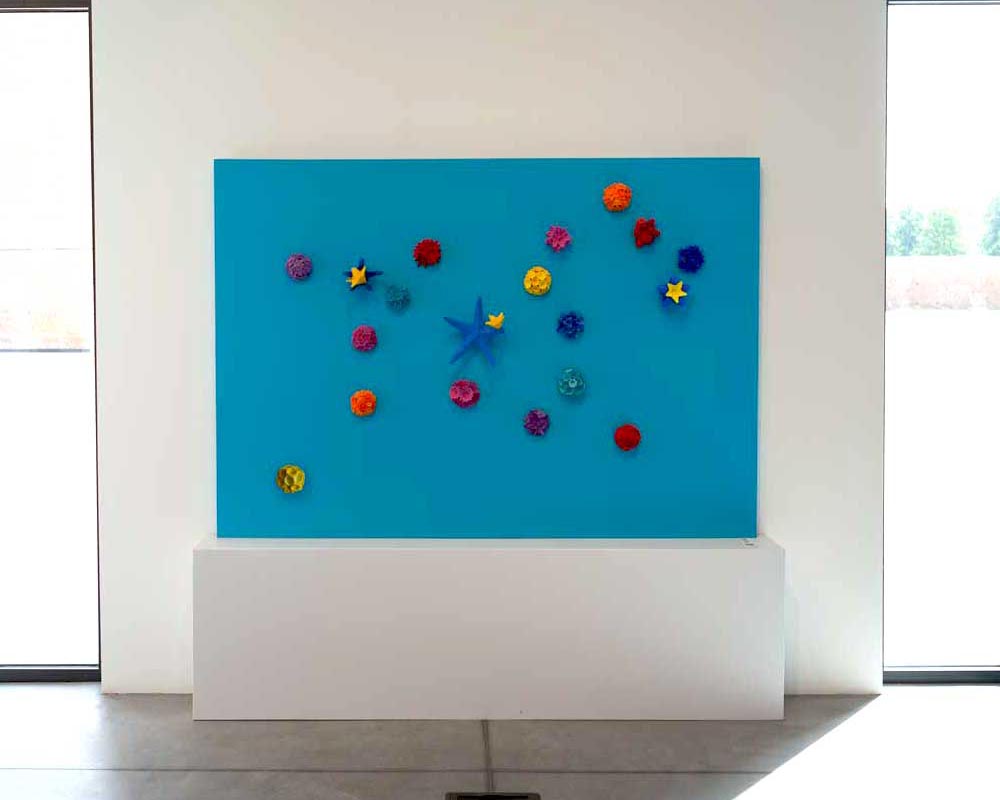
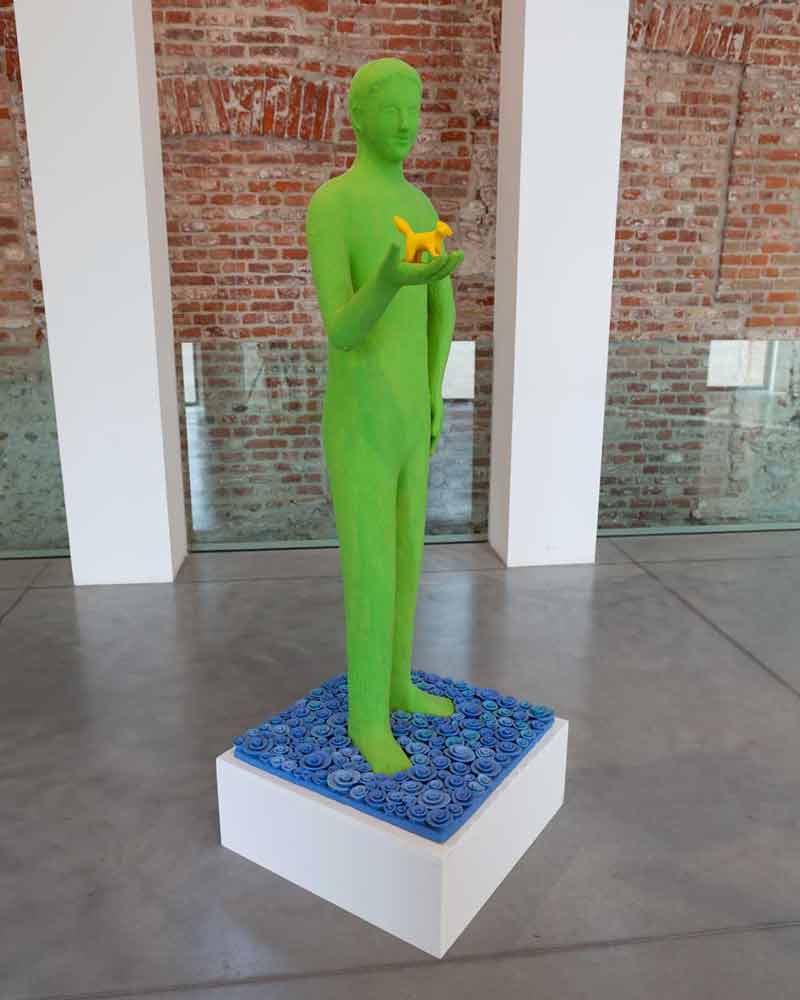
1, Stella Leone (Leo Star, 2024): A work that originates from the ancient gesture of observing the celestial vault to know the time. The sculpture stems from the desire to expand the imagination, visualizing the shape of the Leo constellation in a daytime sky.
2. Metamorfosi (Metamorphosis, 2016): An anthropomorphic figure inspired by the shapes of an olive tree. It metaphorically represents the delicate period of transformation experienced by a boy during adolescence.
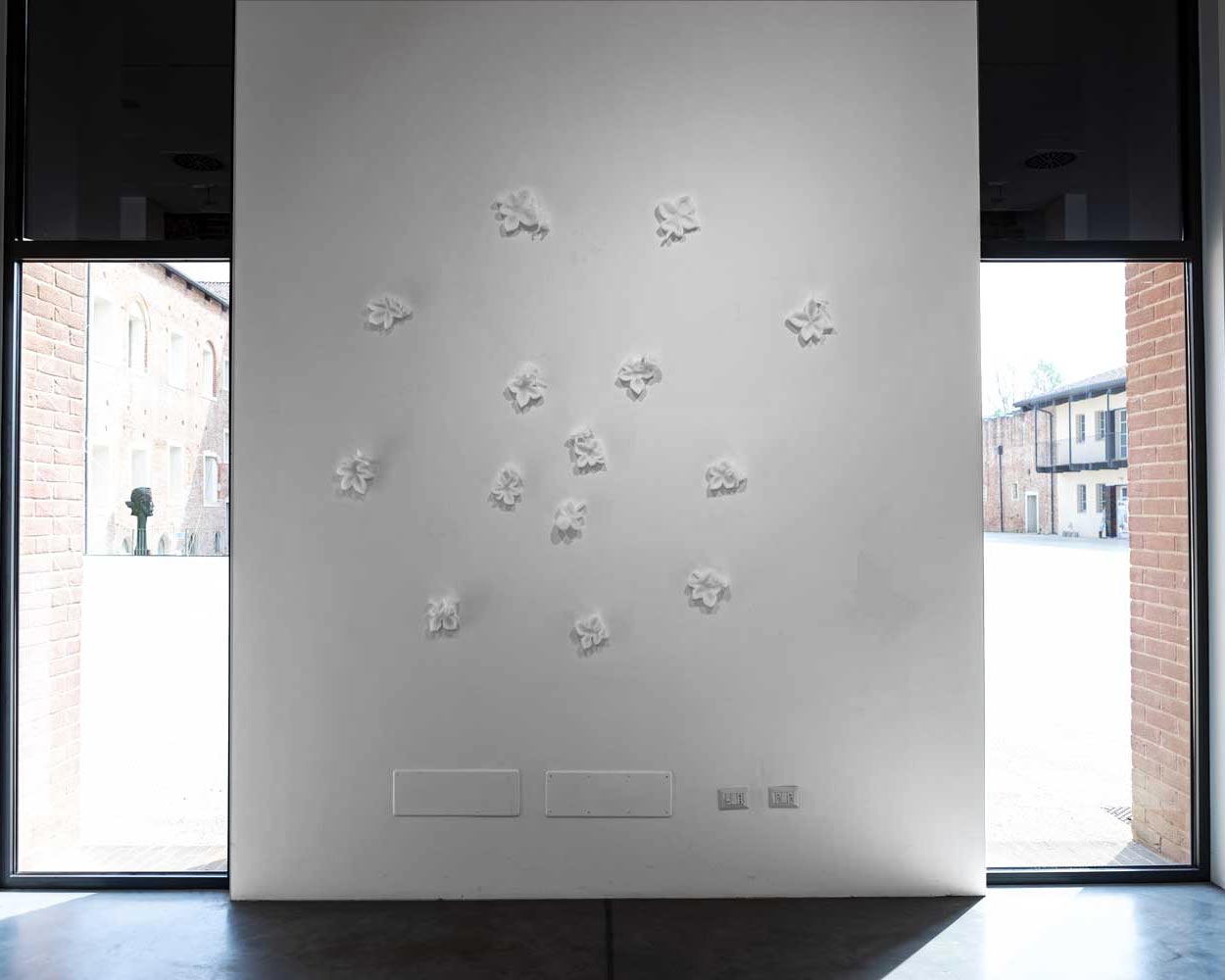
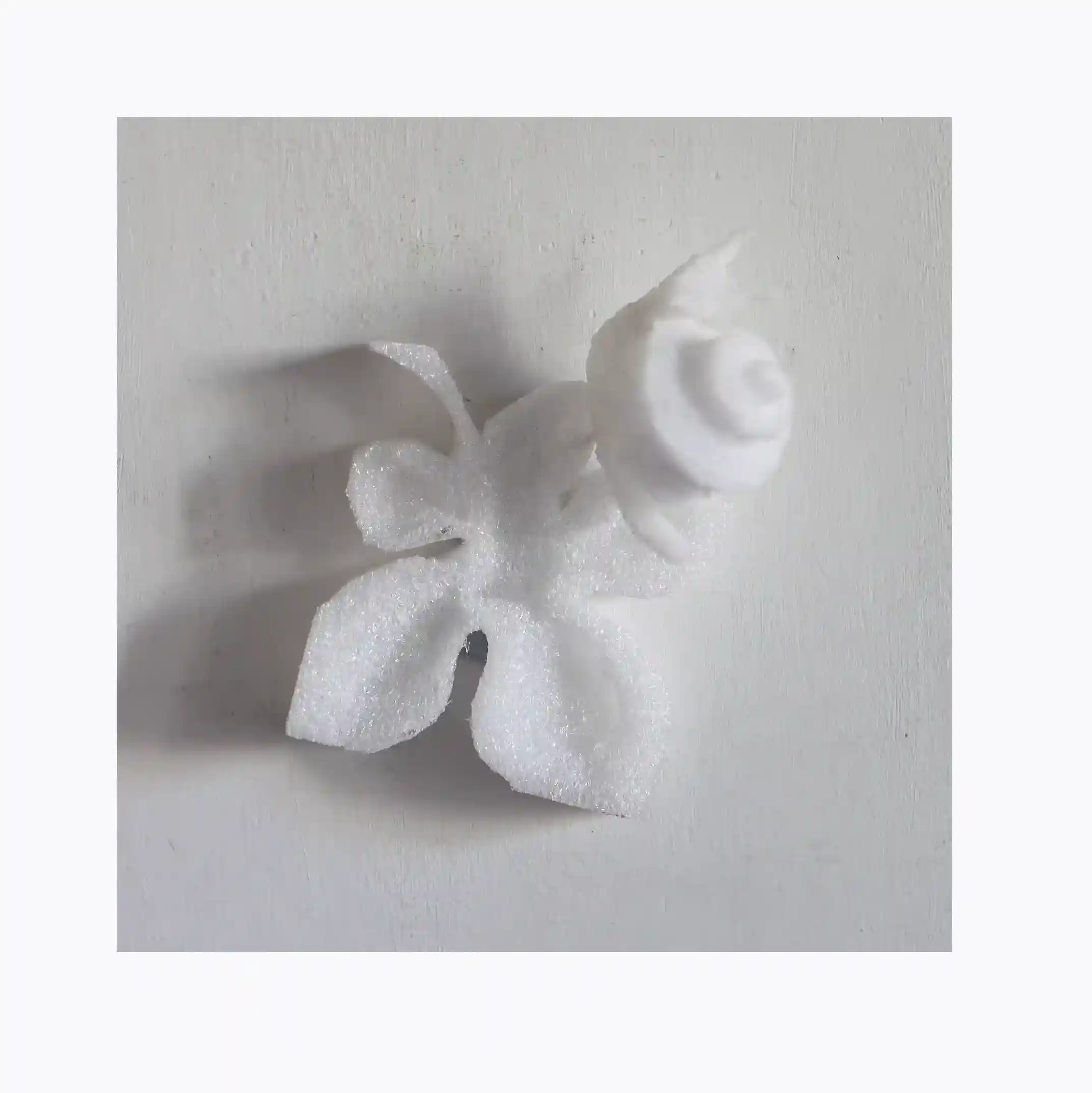
3. Le 12 Vivente (The 12 Living, 2026): The most recent work in the exhibition, made of polyethylene. It celebrates the presence of the small insects that inhabit nature, exploring the balance of their forms and the mysterious qualities of this material.
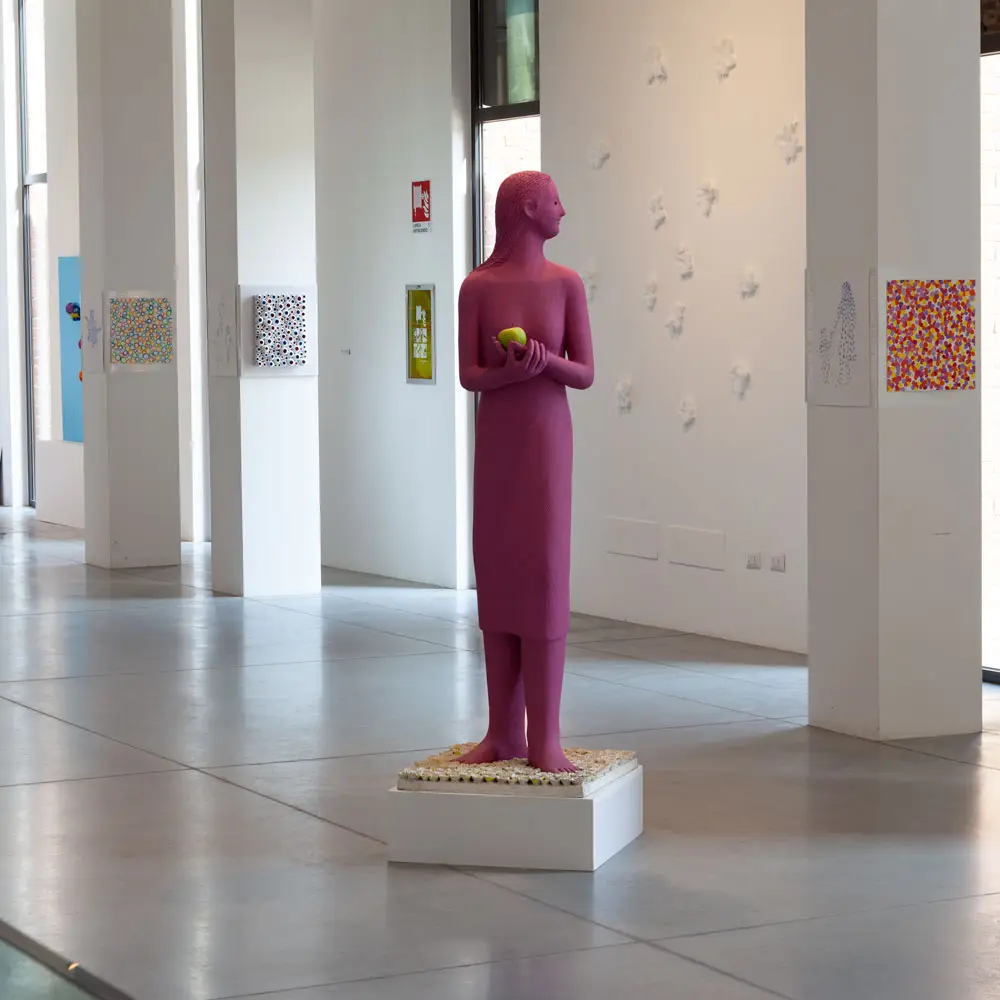
4. Ragazza con la mela (Girl with the Apple, 2004): A figure inspired by Eve and the image of an apple tree, characterized by soft shapes and rosy tones. The specific technique used for the eye cavities recalls the sculptures of ancient Japanese haniwa.
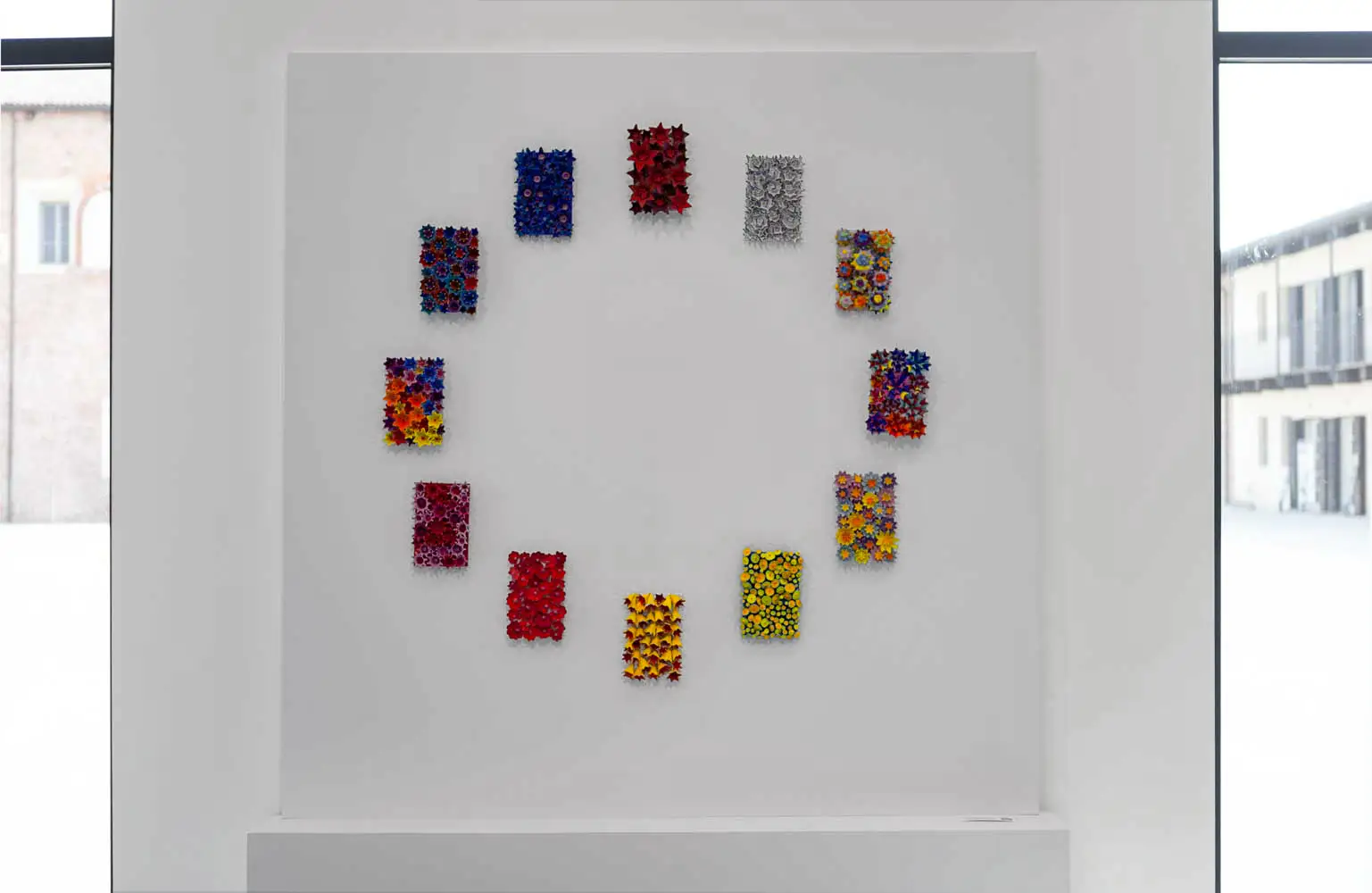
5. Il tempo – Calendario (Time – Calendar, since 2004): An ongoing series of which 298 days have been created so far, out of a final goal of 365. Twelve specific dates are on display, arranged clockwise. Through the balance between form and color, the work conveys the inner image of the four seasons.
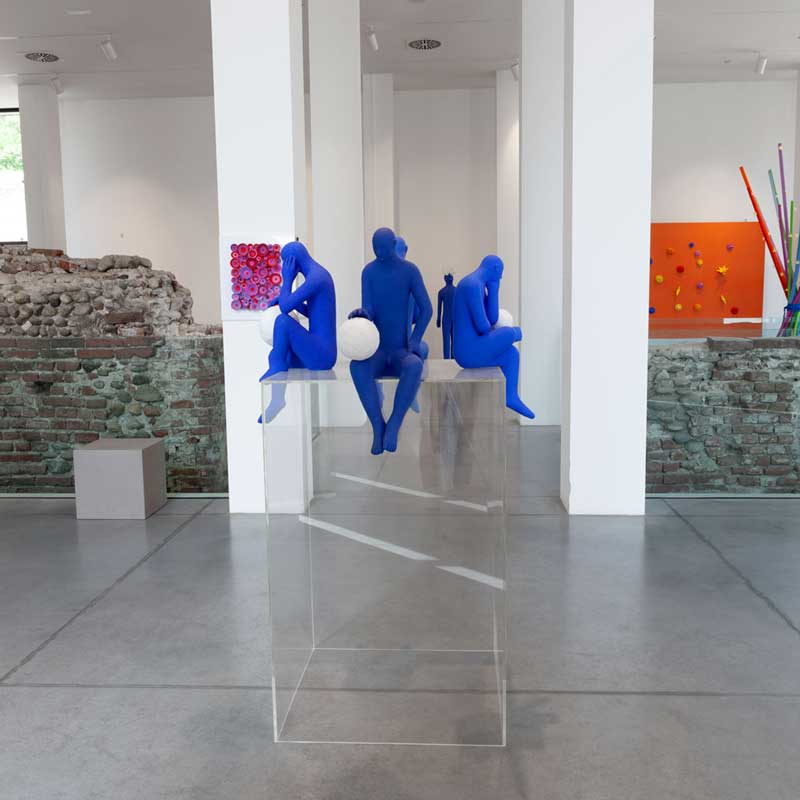
6. Uomo blu (Blue Man, 2001-2020): Depicts a man holding a white sphere, a symbol of thought. Conceived in the early 90s, the work represents the contemporary individual, increasingly static and immersed in a solitary dialogue in front of a screen or smartphone; a subject whose thought becomes his entire identity.
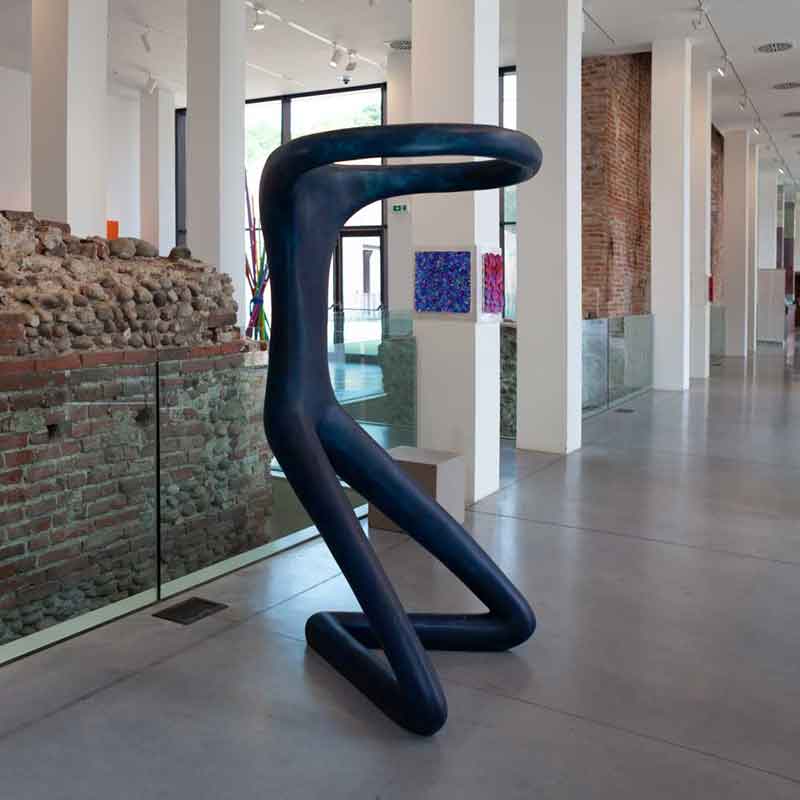
7. Il cerchio blu (The Blue Circle, 1992): The only sculpture made of fiberglass, a material the artist explored with great interest after the Academy, only to have to abandon it for health reasons. The work invites the observer to imagine stepping into a blue ring to contemplate the sky from within.
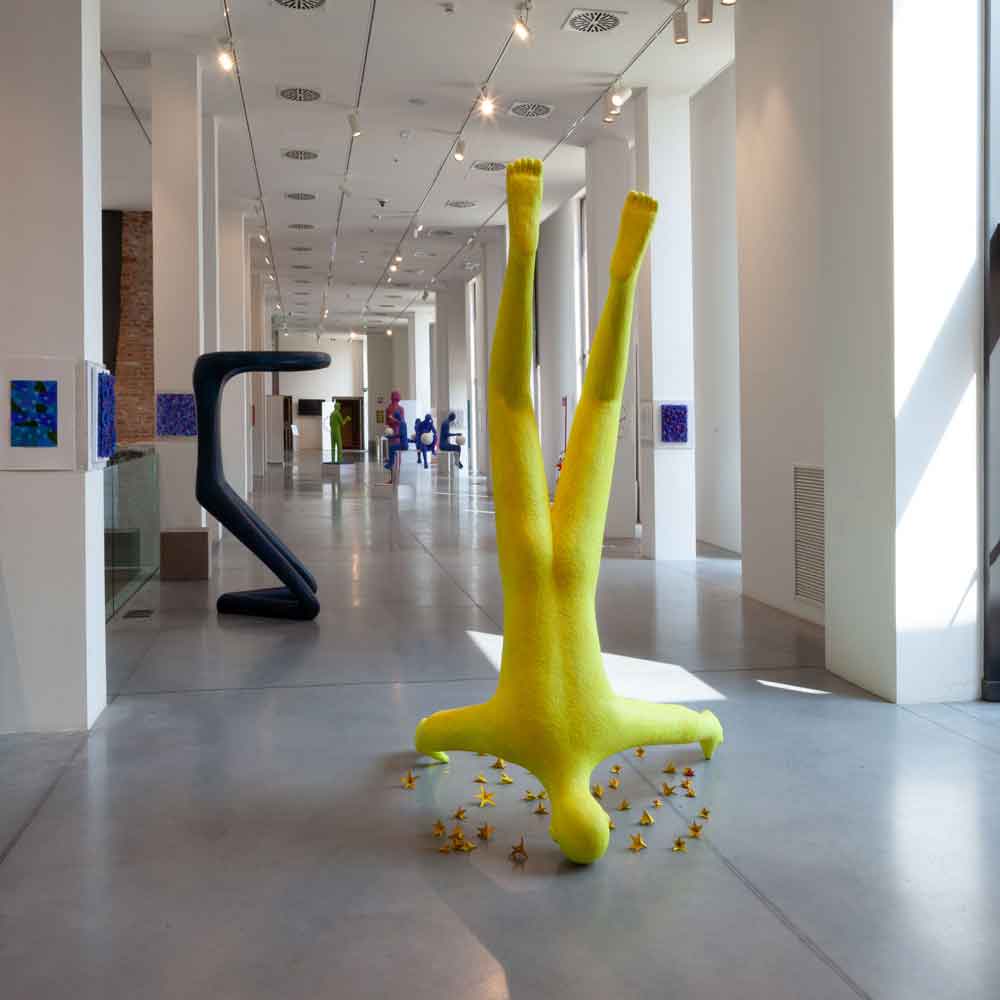
8. La scheggia del pensiero / Icaro (The Splinter of Thought / Icarus, 2003 / 2020): Originally conceived in dialogue with a yellow cloud, the work was presented upside down (with the title Icarus) in 2020, to reflect the sense of a fractured reality felt during the pandemic. The surrounding yellow stars represent the hope for the birth of a new reality.
9. Video: A visual documentation retracing the artist’s activity and exhibitions from 1990 to 2025.
10. La fortuna (Fortune, 2026): An installation composed of painted wooden sticks and yellow plastic stars. Born from the memory of a trivial domestic accident (pasta accidentally falling on the floor), the work reflects on the uncontrollable and sudden nature of events, understood precisely as Fortune.
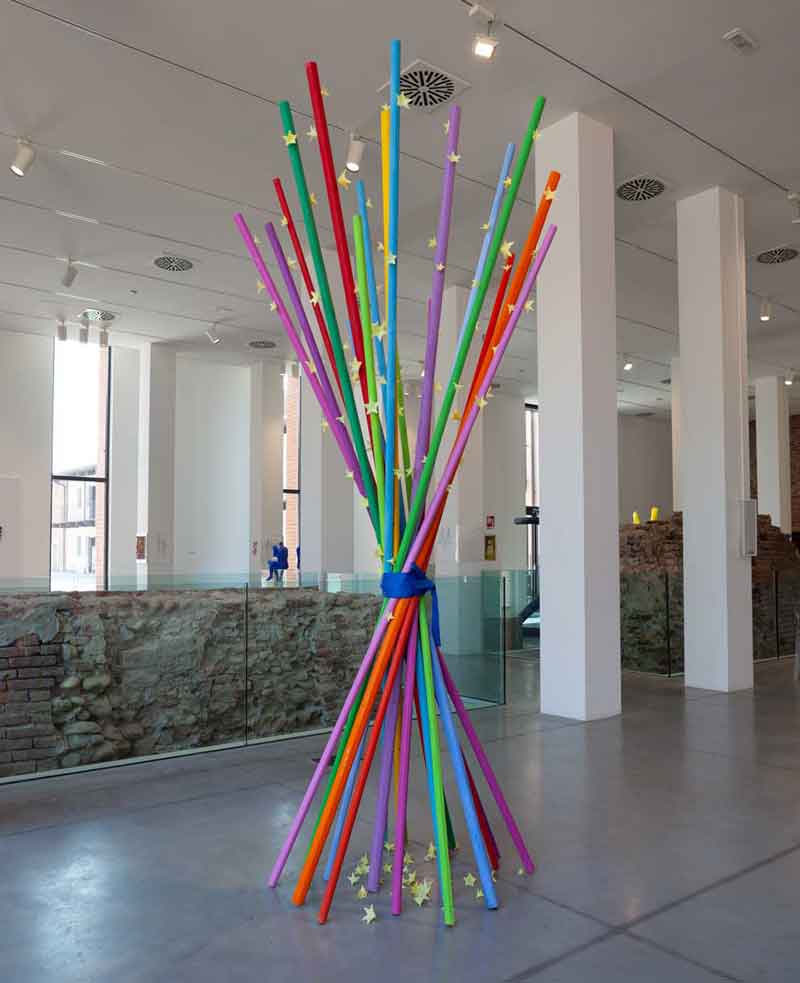
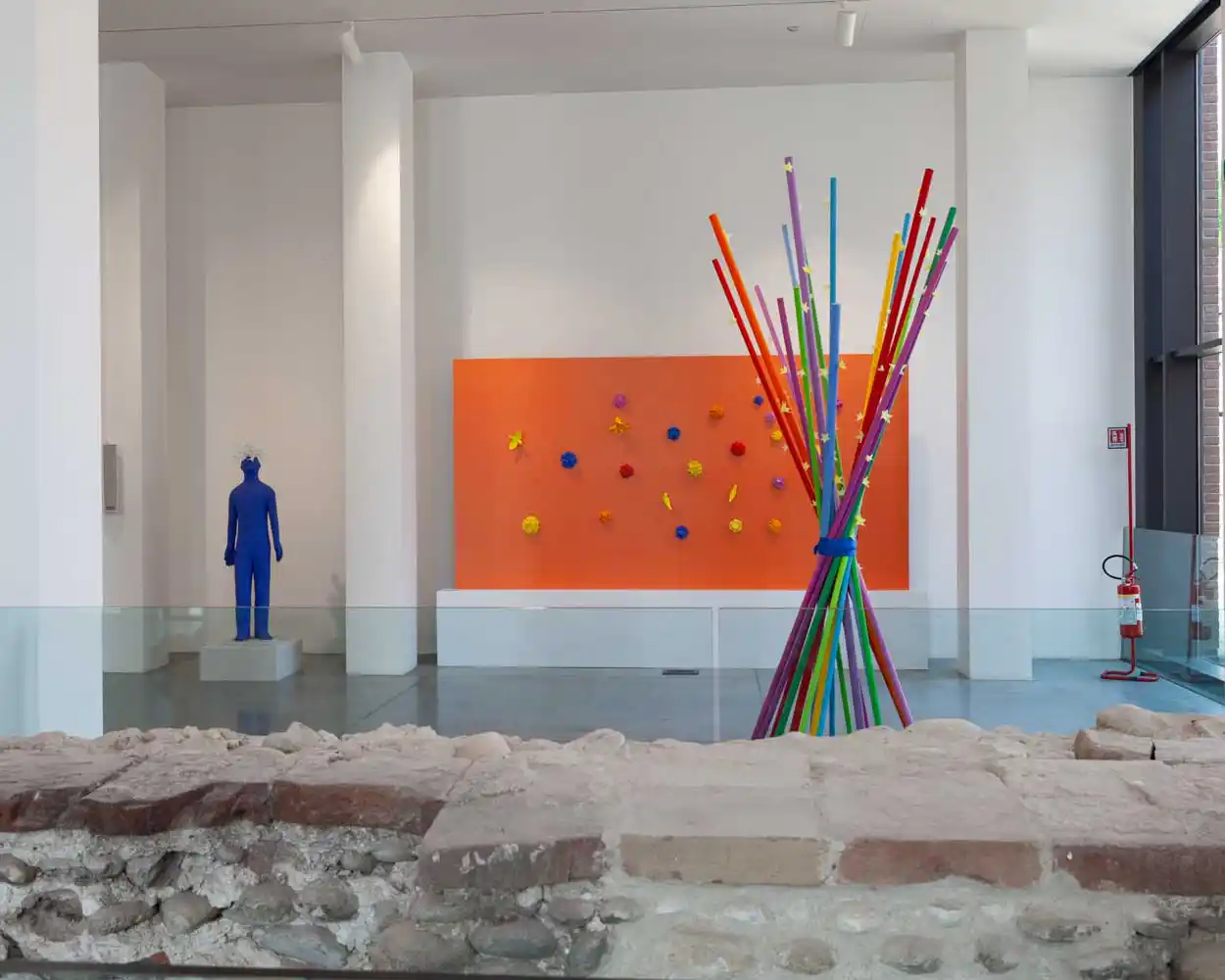
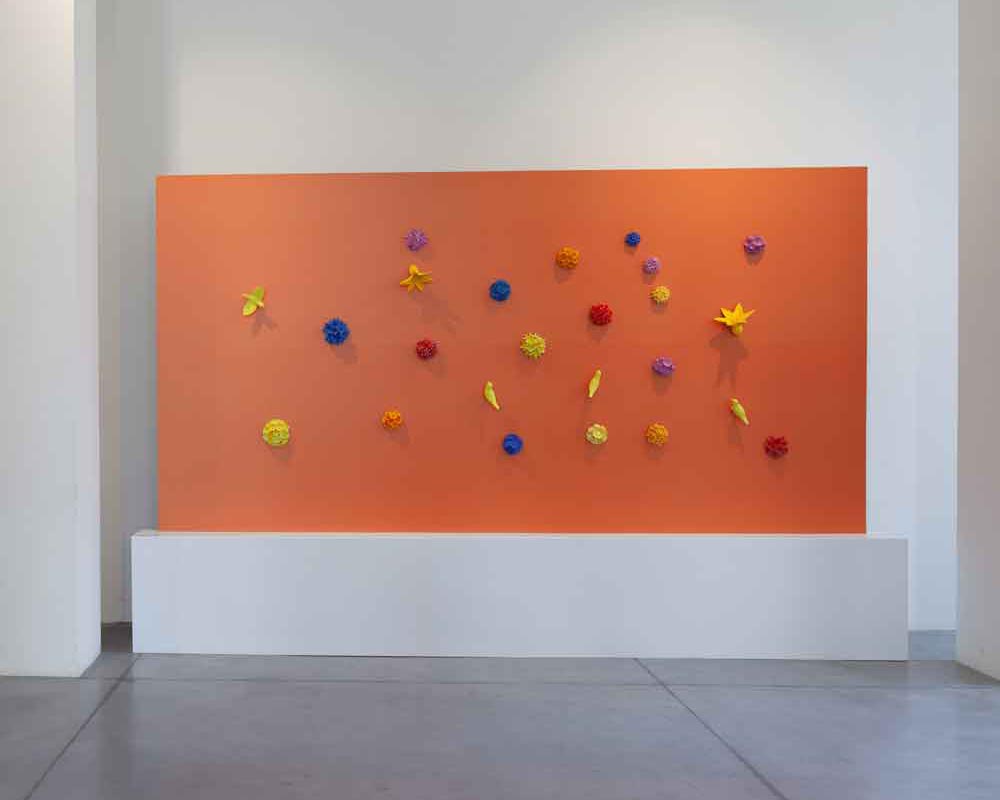
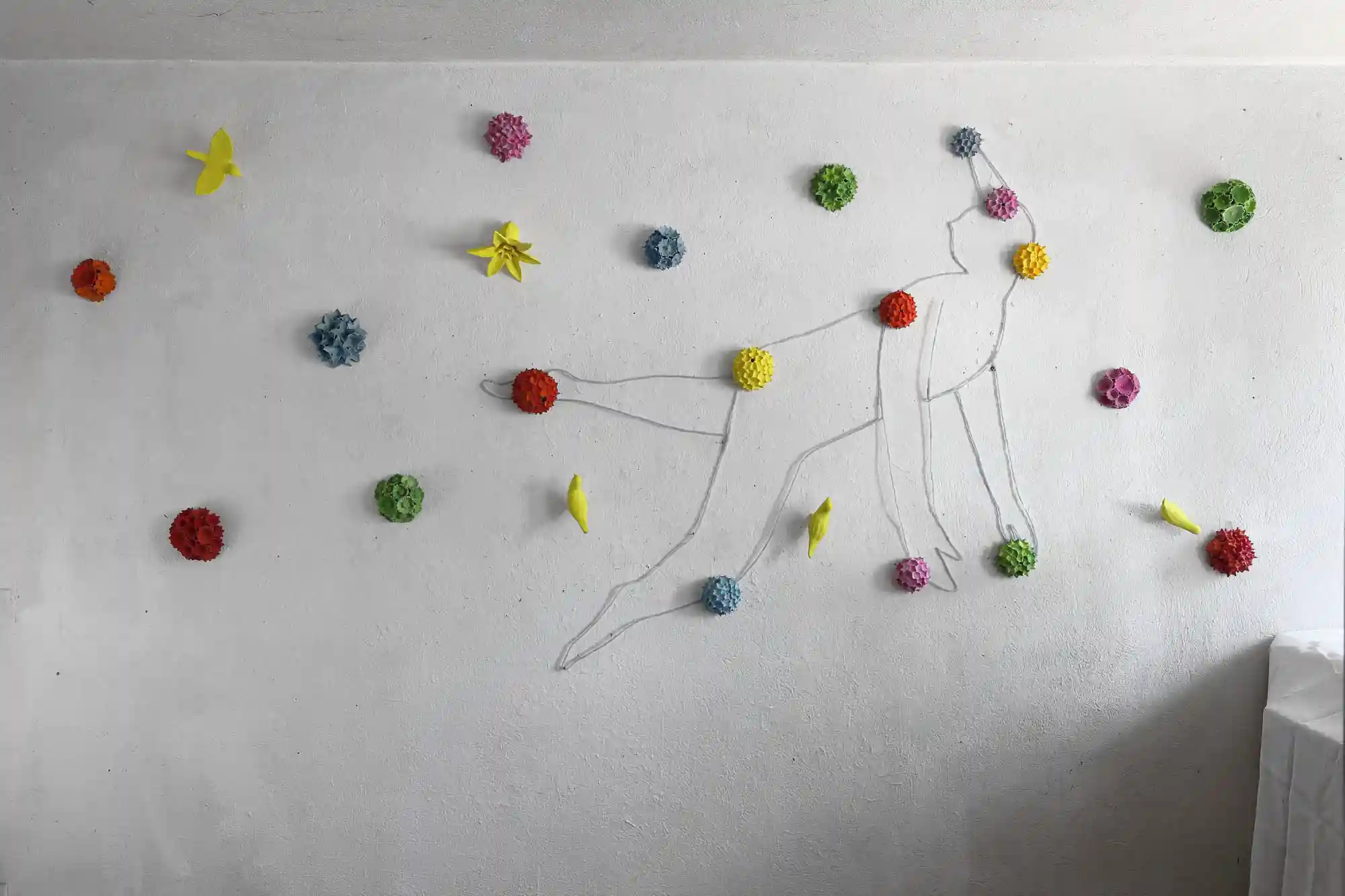
11. Il sogno delle stelle danzanti / Unicorno (The Dream of the Dancing Stars / Unicorn, 2025): A stellar composition that conceals the figure of the Unicorn constellation within it, inviting the public to try and find it.
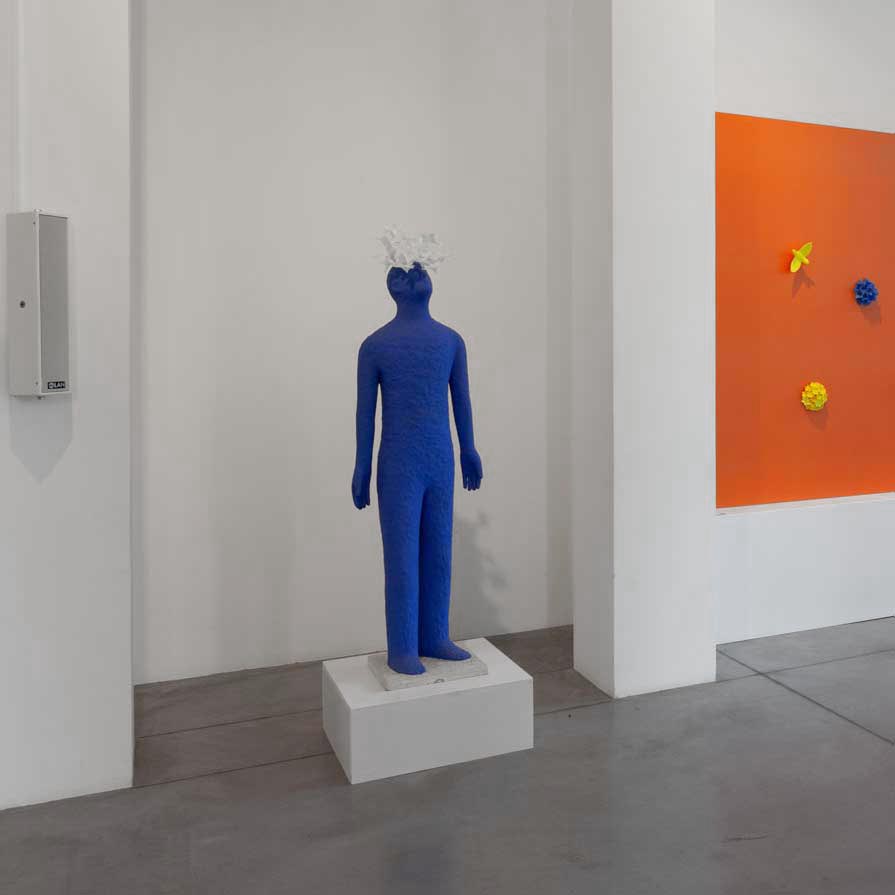
12. La testa tra le nuvole (Head in the Clouds, 2006-2026): The union of a boy in colored terracotta and a plastic cloud. It is the visual translation of the uncontrollable youthful emotions that crowd the mind.
The Installation on the Columns
The vertical spaces of the room dialogue with the works on the ground: the columns house painted terracotta elements representing the passage and changing of clouds during the different phases of the day (morning, noon, sunset, and night). These are accompanied by acrylic drawings on paper that capture the light atmosphere and scenes of a day spent at the park.
